
ABOUT THE DOJO
Aikido in Southport.
Zenreikan Aikido Southport is a dojo for the study and practice of Aikido.
We are part of the North West Aikikai, an independent group of Aikidoka. All instructors have British Aikido Board coaching qualifications and insurance.
OUR TRADITION
Rooted in the Aikikai tradition.
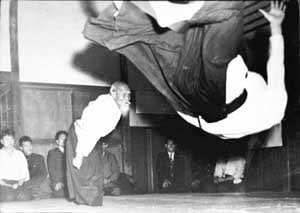
We practise in the Aikikai style and our classes reflect the tradition, etiquette and spirit passed down from the founder, Morihei Ueshiba.
Reigi — the etiquette and behaviour we observe in the dojo — is an important part of that tradition. It is no coincidence that reigi is the first requirement on our grading syllabus.
OUR APPROACH
Train with purpose.
Kihon
Building from the basics.
Kihon — the basics — is central to our practice. Posture, balance, position and movement provide the foundations on which good Aikido technique can develop.
These basics are not something we learn as beginners and then leave behind. They are returned to, repeated and refined throughout our training as our understanding develops.
Principles
Connected through practice.
The principles of Aikido run through different forms of practice. Alongside empty-handed standing techniques, the training includes weapons and suwari waza — techniques performed while kneeling.
Each form places a different emphasis on the principles we are developing. Weapons practice can develop posture, distance, position and an understanding of the line of attack, while suwari waza places particular demands on movement, centre and correct form. What we learn through one form of practice can improve another.
Application
Learning to adapt.
New techniques are initially practised in a controlled way, giving us the opportunity to understand the movement and develop the underlying principles. As experience grows, the practice can gradually become more dynamic. Different partners, changing attacks and greater commitment require us to adjust what we are doing rather than simply reproduce a predetermined technique. The aim is not just to remember a movement, but gradually to become better at responding to what is actually happening.
“There are naysayers in the world at large who claim that studying the Way of Combat Strategy is futile when confronted with the reality of battle. In response to this claim, I teach that the warrior must practice his craft in such a way that it is practical and functional in all things and at all times, for this is the true Way of Combat Strategy.”
THE JOURNEY
Every student's journey is unique.
What happens after you begin is not the same for everyone. Progress comes at different rates, interests develop in different directions, and what each student values about Aikido can change as their experience grows.
Practice develops over time, and so does your understanding of what you want from it.
MORE THAN LEARNING TECHNIQUES
Aikido is learned with other people.
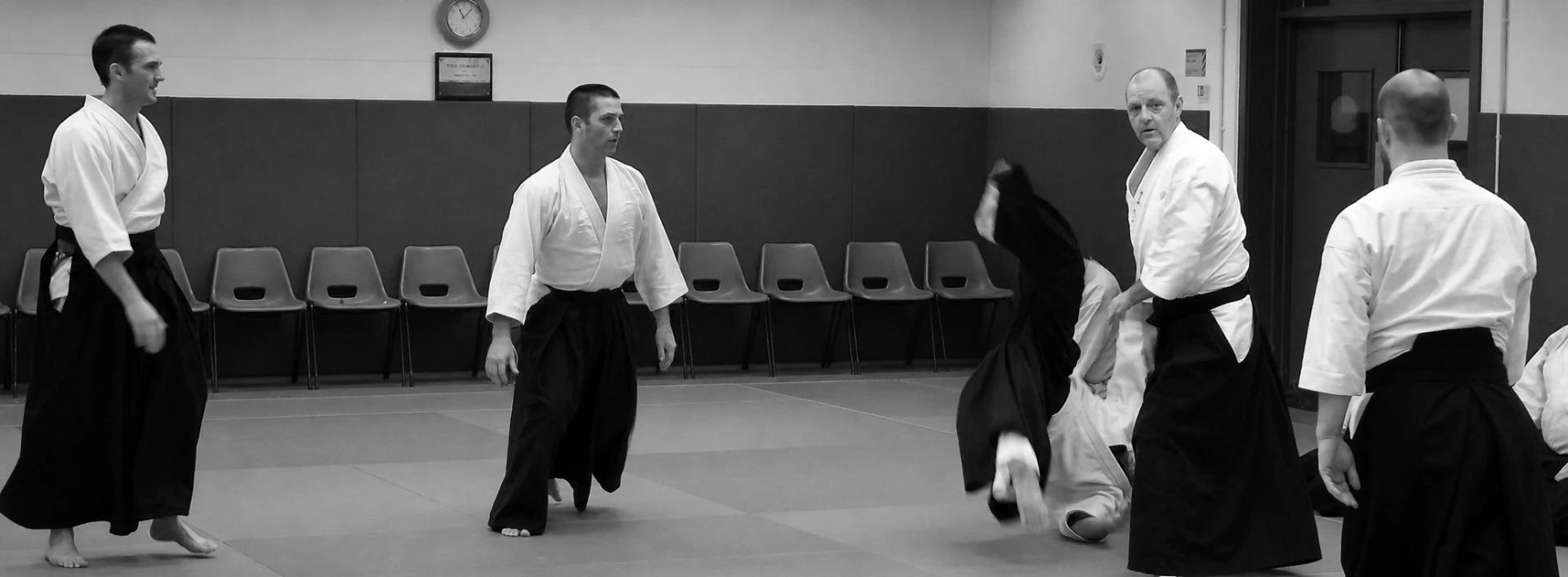
You learn by repetition — the same movement, many times, on both sides, with someone who is also learning. Some evenings it clicks. Often it does not, and you come back and try again.
Working with different partners is a large part of it. People are different heights, different strengths, different ages, and they attack and hold in different ways. A technique that worked well a moment ago has to be adjusted. That adjusting is the skill we learn.
Over time you notice things earlier: where someone's weight is, when your own balance has changed, how much space you have. You begin to respond to what is actually happening rather than reacting to what you expected. Movement becomes more coordinated and requires less effort.
Understanding arrives slowly and unevenly, and there is a real pleasure in that — the sense of continuing to learn something rather than finishing it.
“Progress comes to those who train and train; reliance on secret techniques will get you nowhere.”
Come and see for yourself.
The best introduction to what we do is to watch a class, or simply give it a go.